A Borrowing Shelf or a Lending List? Two Ways to Share Household Items
Choose a borrowing shelf or lending list that fits the household items neighbours share, with clear places to find them, arrange handovers and return them.
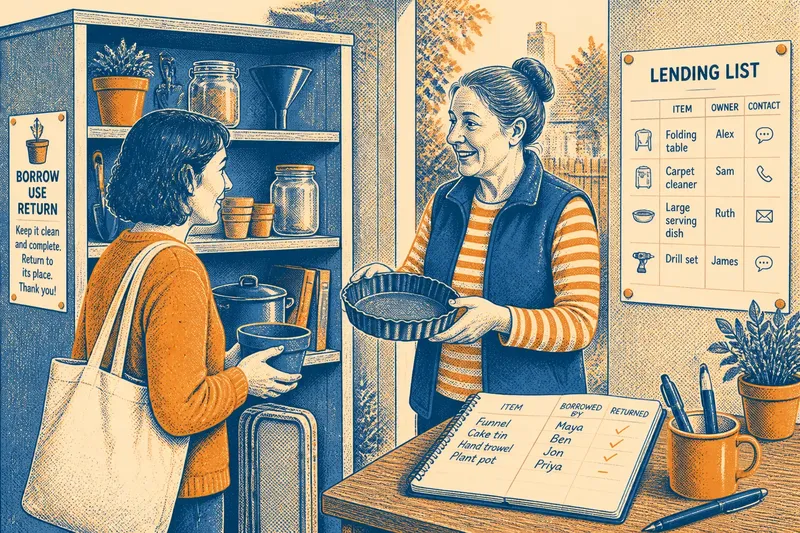
A borrowing shelf or lending list works best when neighbours can see what is available and know how to return it. A shelf suits small, easy-access objects; a list suits belongings that need a named borrower or a personal handover. Choose according to the item, not a wish to build a complicated system.
Start with a few objects people are comfortable lending, then agree where they belong and how borrowers should return them. You can use both approaches, as long as each item has one clear home in the arrangement.
Start with objects
Ask neighbours what they would genuinely be happy to lend. Suggestions might include a funnel, cake tin, hand trowel, folding table or book of local walks. An item is suitable only if its owner is content to share it and borrowers can follow a clear return arrangement.
Think about how easily each object can be recognised, stored and handed back. A clean jam jar or spare plant pot can sit on a shelf. A carpet cleaner, a distinctive serving dish or a tool with several parts is easier to manage when someone knows who has it.
Leave out anything unsafe to share, difficult to maintain or personally important to its owner. For equipment with specific operating instructions, follow the maker’s guidance and relevant local rules. Nobody should feel pressured to lend something they would rather keep private.
Match items to systems
A borrowing shelf depends on visibility and easy access. It suits recognisable objects that can be left in a tidy, sheltered communal spot and returned without arranging a handover. A shelf in a community room, shared shed or other agreed place can make spare household items easy to find.
A lending list depends on a record and a clear handover. It suits larger or less obvious items, belongings stored at someone’s home, and things a borrower should check are available before making plans. The record could be a paper notebook by a shared cupboard, a noticeboard sheet or a simple digital document.
Say a neighbour has a folding table stored in a garage and wants to lend it for a street gathering. They put “folding table” on a paper list, add a preferred contact method and explain that collection must be arranged with them. A borrower can then ask about availability and agree on collection and return, rather than searching the shared shelf or assuming they can enter a private space.
Not every item needs a label, sign-out process or shared database. Tracking each small, replaceable object is usually more effort than it is worth; reserve extra record-keeping for items where knowing the borrower helps.
Choose a visible home
Place a shelf where neighbours can reach it when they are likely to need it, while keeping items sheltered from rain and damp. A crate or sturdy cupboard can keep things orderly, but avoid mixing in unrelated donations. A short sign should explain what belongs there, where items go after use and whom to contact if something is missing.
Make a lending list easy to find before someone starts asking around. A paper copy may suit neighbours who visit the community hall; a shared digital file can help people check from home. Include only useful details: item name, owner or contact, collection arrangement and return preference. Get permission before sharing anyone’s personal contact details.
Describe items clearly. “Blue cake tin, in the hall cupboard” is more useful than “baking equipment”. For anything kept away from the shared spot, give a location the owner is comfortable sharing, and do not assume neighbours can enter a private shed or house.
Agree on returns
Keep the return arrangement easy to remember. A shelf item can usually go back to its marked place, clean and complete, once it is no longer needed. For an item on a list, agree with the owner on a return point and timing before taking it away.
Make the item’s condition clear at handover. Mention a dent in a cake tin or a loose label on a garden tool, so the next person knows what was already there. For an object with several parts, a note such as “return with the pouch” can prevent an accessory from going astray.
Agree how to handle a late return without making it a source of embarrassment. A friendly message asking when the item will be back is often enough; the borrower can explain if they need more time. Owners can pause lending, and borrowers should understand that borrowing does not create a permanent claim on someone else’s belongings.
Set shared rules
Keep the rules brief enough to read while picking something up. For each point below, check the situation and follow the stated decision; if the preferred arrangement does not fit, use the alternative.
- Check whether an item is small, recognisable and safe to leave in the shared spot; if it is, put it on the shelf, but if not, record it on the lending list or leave it out.
- Check whether the owner has agreed to borrowers taking an item without asking; if they have, mark it as available for shelf borrowing, but if they have not, require a direct request before handover.
- Check whether the item can be returned to a marked communal place; if it can, state that place, but if it cannot, agree a return point with the owner before lending.
- Check whether the item has visible damage or separate parts; if it does, note its condition and name the parts at handover, but if it does not, use the ordinary return rule.
- Check whether the owner has approved sharing their contact details; if they have, include the agreed method on the list, but if they have not, route enquiries through an agreed organiser or omit the item.
- Check whether the owner still wants to lend the item; if they do, leave it listed or on the shelf, but if they do not, remove it promptly and tell borrowers where applicable.
Use an inviting tone rather than implying that sharing is compulsory. Neighbours may have good reasons to keep belongings at home, limit access or opt out altogether. A useful arrangement makes participation straightforward and leaves those choices intact.
Which setup fits?
What belongs on a borrowing shelf?
Choose clean, easily recognised objects that fit in the shared place and can be returned without a personal handover. Spare plant pots, jars or simple kitchen items may suit if their owners are happy for neighbours to take and return them.
When is a lending list better?
Use a list when an item is stored elsewhere, needs an agreed handover or has an owner who wants to approve each loan. A list also lets borrowers check availability before planning a collection.
Can a group use both?
Yes. Keep easy-access items on the shelf and record privately stored or specific items on the list. Add a small note by the shelf telling neighbours where to find the list, so there is no need to duplicate records.
What if an item is not returned?
Contact the borrower privately to ask about a return time or any problem with the item. If it remains unavailable, pause further lending and let the owner decide whether to follow up or remove it from the arrangement.
Review what works
After neighbours have used the system for a while, look for practical signs of fit: do shelf items return to their place, can people tell what is available, and are listed items handed back as agreed? Ask a few borrowers and owners what feels awkward. If people cannot tell where to return an object, improve its label; if collection arrangements cause repeated uncertainty, move it to the list.
Imagine a small group starts with a hand trowel, spare plant pots and a folding table. The trowel and pots are clean, easy to recognise and can go back to a marked crate, so the group puts them on the shelf. The table stays in its owner’s garage, so they add it to the list with a contact method the owner has approved and agree on collection and return directly. The result is a simple division: neighbours can take and replace the small items, while the table has a clear handover and does not invite anyone to enter private storage.
Keep changes modest: remove objects nobody wants, make the list easier to find if neighbours keep asking what it contains, and add storage only when the existing space no longer works. A borrowing shelf or lending list should make sharing easier to manage, not turn an ordinary favour into administration.