A Winter Table for Swapping Seeds, Stories and Garden Notes
A winter seed swap can bring neighbours together without forcing lively conversation: choose a format that suits your guests and make quiet participation easy.
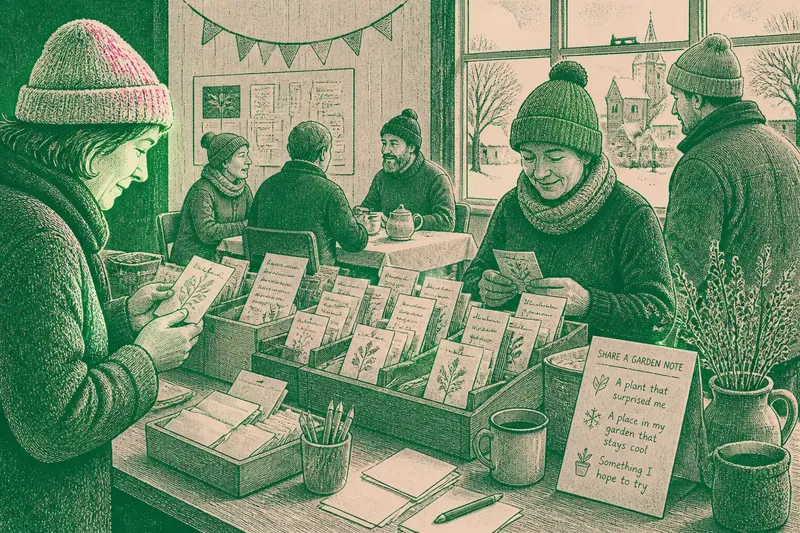
A winter seed swap works best when the table makes room for both packets and pauses. In a village hall, conservatory or someone’s kitchen, saved seeds can prompt useful garden notes and easy conversation without turning the gathering into a formal class.
The shape matters. A drop-in table suits people who like to browse, a small-circle supper gives stories time to unfold, and a guided exchange helps newcomers make sense of unfamiliar seeds. Choose one main format, then leave space for quieter ways to take part.
Three table formats
Think about what guests are likely to want from the gathering. Some will come to find seeds; others may welcome a reason to talk about a stubborn patch of ground, a favourite bean or what they hope to try next season.
The open seed table
Set out seed packets, envelopes and garden notes so people can browse at their own pace. This relaxed format suits a community room, library corner or café back room where visitors may arrive at different times, and it is kind to anyone who would rather look before speaking.
Keep the layout clear: place seeds in shallow trays or labelled boxes, with a separate space for empty envelopes and pencils. A note beside each contribution can name the plant, where it grew, when it was gathered and anything uncertain about its identity. Guests can take something, leave something or simply read.
The trade-off is that conversations may be brief and the table can become jumbled if nobody tends it. Ask one or two willing hosts to welcome arrivals, replenish supplies and make gentle introductions without expecting them to lead a programme.
The small-circle gathering
A seated circle around tea and a shared table suits neighbours who value conversation as much as the exchange. Invite each person to bring a packet, a garden note or simply a question. Nobody needs to bring seeds to belong at the table.
This format gives stories room: one gardener might describe how a sheltered wall helped a late crop, while someone else shares what they learned from a pot on a doorstep. Encourage people to speak from their own gardens rather than offer universal prescriptions; local soil and exposure can make advice travel unevenly.
A set start and shared conversation can feel demanding for a shy guest or someone arriving late. A quiet corner with written prompts lets people listen, add a note or step away without explanation.
The guided exchange
A lightly hosted exchange suits a group with many first-time gardeners or a collection of seeds that needs careful labelling. The host can explain how to read each packet note, then invite people to compare what they hope to grow with the conditions they can offer.
Keep the guidance practical rather than turning it into a lesson. Ask whether a plant needs a sunny bed, a pot or a sheltered spot, and encourage contributors to distinguish what they know from what they are unsure about. That makes the notes more useful without asking anyone to pretend certainty.
A host can accidentally take over, so keep opening remarks short. Then let guests browse and talk in pairs; a printed prompt can explain the basics to people who arrive later.
Choosing a format
Choose around the gathering you can comfortably host, not the grandest version you can imagine. Start with three questions: Will people arrive together or drift in? Do they know one another already? Is the main purpose finding seeds, sharing observations or making room for both?
- Arrival pattern: If guests will come and go, choose an open table; if everyone can arrive together, consider a circle.
- Group familiarity: If most guests already know one another and enjoy talking, choose a small circle; otherwise, make browsing the main activity.
- Gardening experience: If many guests are new to seed saving, choose a lightly guided exchange; if they are comfortable reading labels, let the table do the explaining.
- Main purpose: If finding seed is the priority, make packets easy to browse; if sharing local observations matters just as much, provide cards and a place to sit.
- Room layout: If there is space for separate areas, combine browsing with a quiet tea corner; if not, keep one clear table and avoid crowding the entrance.
- Hosting capacity: If you can ask a neighbour to welcome arrivals and tidy the table, an open format is easier to tend; if you are hosting alone, choose a simpler layout with clear labels.
Say you are organising a winter gathering in a draughty village hall, and several neighbours can stay only briefly. An open table with a quiet tea corner is likely to suit better than a seated circle: people can read a packet note, leave a garden observation and depart without interrupting a shared discussion.
For a smaller group of familiar gardeners with an unhurried evening, a circle may feel warmer and less like a market stall. If the choice is still unclear, ask two neighbours what they would enjoy and describe the format plainly on the invitation, including whether guests can drop in or should expect to stay for conversation.
Seed notes that travel
A packet is more helpful when it carries a little context. Reused envelopes are fine; add a label in pencil or pen and leave room for the recipient to write observations after sowing.
Useful details include:
- The plant’s common name, and its variety if known.
- Where it grew, such as a sunny border, raised bed, pot or sheltered courtyard.
- Whether the seed was saved from one plant or several, if the contributor knows.
- The season or growing conditions, described in everyday terms.
- Any uncertainty, such as an incomplete label or a plant that may have crossed with another.
Keep the tone honest. “Did well beside the south-facing wall” is more useful than a sweeping promise, and “identity uncertain” gives the next gardener a fair chance to decide whether to take it. Where identity or handling depends on the packet label, supplier guidance or local rules, follow that information rather than guessing.
Garden notes can be as valuable as seeds. Leave blank cards for observations about shade, wind, soil that stays damp, a late frost pocket or a spot where slugs gather. These small local details rarely fit on a packet, but they can shape what a neighbour chooses to grow.
Quiet ways to join
Conversation should be available, not compulsory. Put out prompts that can be answered in a sentence or left blank: “A plant that surprised me”, “A place in my garden that stays cool” or “Something I hope to try”. Guests can write rather than speak, and a host should read notes aloud only with permission.
Leave a clear path and avoid arranging chairs so every arrival faces a group. Someone can browse, take a cup of tea, read the notes and leave without announcing themselves. That is one of the ways the table can welcome different temperaments.
Matching labels, elaborate decorations and a complicated exchange system are not worth the effort. A few envelopes, pencils, trays and readable notes do more for the gathering than a polished display, especially when people are carrying coats and bags.
Questions about seed swaps?
What should guests bring to a winter seed swap?
They can bring labelled saved seed, a garden note, a question or nothing at all. Say so in the invitation, so bringing seeds does not feel like an entry fee.
How can beginners feel welcome?
Use plain labels, explain unfamiliar terms when they arise and let people browse without being quizzed. Mark what is known and what is uncertain, rather than implying every packet has an expert-checked identity.
Can guests take seeds without bringing any?
Yes, if that suits the group’s purpose and the available supply. Explain that the table is for sharing rather than strict one-for-one trades, and invite guests to contribute a garden note or return with observations later.
What if a seed’s identity is uncertain?
Write the best-known plant name and mark the uncertainty plainly instead of filling in a guess. If there is no reliable identification, set the packet aside rather than passing it on as known.
A gentle closing rhythm
Near the end, give people a quiet moment to check that packets are labelled and garden notes have not been mixed into the seed trays. Anyone who wants to exchange contact details can do so directly; a follow-up group or future commitment need not be part of the gathering.
As guests leave, a card by the door can ask what they would like more of next time: seeds, garden observations, conversation or simply an open table. Those replies can guide another winter seed swap, while the notes people carry home give them something local and specific to look for when the garden wakes again.