The Open Invitation Myth: Why a Welcome Can Still Feel Hard to Join
An open invitation can still feel hard to accept. Make the first visit legible with clear arrival details, simple expectations and an easy way to join in.
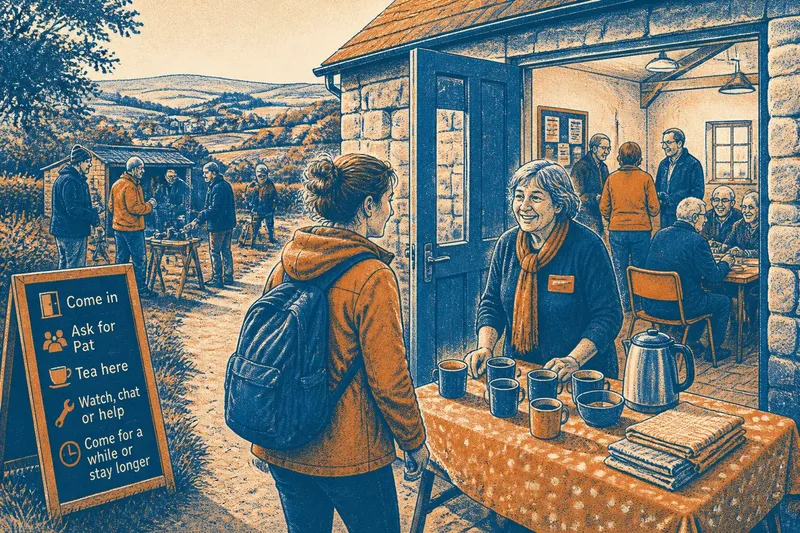
An open invitation can still feel hard to accept when nobody explains what a newcomer should do on arrival. In a rural community, the first step into a hall supper, garden gathering or volunteer morning may depend on routines everyone else already knows. A welcome becomes usable when those routines are made visible.
Open does not mean obvious
“Everyone’s welcome” is a generous message, but it answers only one question: who may come. A newcomer may still wonder whether to knock, walk straight in, bring food, sign a sheet or wait for someone to greet them.
These uncertainties can be small and still matter. Someone arriving alone may see a room full of familiar faces and conclude that the group is already occupied, even if people would gladly make space. The issue is not a lack of friendliness; it is a gap between the invitation and the practical knowledge needed to act on it.
That gap grows when a gathering relies on habits formed over years. Regulars know which door is open, where coats go, how tea is organised and when the actual activity begins. To a first-time visitor, those details are invisible until they become a reason to hesitate.
Make the first minute legible
Think of the arrival as a short sequence, not a test of confidence. A useful invitation tells someone what they will see and what they can do first: enter through the side door, look for the trestle table, and tell the person there that it is their first visit.
It helps to name the person or role to look for. “Ask Mo at the welcome table” is easier to act on than “someone will be there”. If no one can be assigned, give a recognisable cue, such as a sign beside the kettle or a host wearing a coloured badge.
Say whether arriving late is acceptable and whether people can leave early. Those details help anyone balancing a lift, a shift, caring responsibilities or an uncertain bus connection. A newcomer should not have to guess whether entering after the group has started will interrupt proceedings.
Explain the hidden customs
Group shorthand often sounds natural to regulars: “bring a plate”, “we’ll do the usual round”, or “meet by the shed”. But a phrase can conceal a real decision. Does “bring a plate” mean a dish to share, or just a plate to eat from? Which shed, and at what point in the gathering?
Translate shorthand into plain, brief detail. Say what is optional, what is supplied and what happens if someone brings nothing. If the activity involves a familiar local routine, describe it without assuming the visitor knows the people, places or sequence involved.
It is also useful to explain the social shape of the event. People may wonder whether they are expected to stay for the whole time, contribute to a conversation, help with a task, or simply watch at first. Naming those options makes room for different temperaments without singling anyone out.
Offer a low-pressure role
An invitation feels more approachable when it includes a small way to participate. At a community meal, that might be setting out mugs with a regular; at a path-clearing morning, it could be sorting gloves or carrying a light bundle. A clear task gives a newcomer something to do while they learn names and rhythms.
Keep the role optional and easy to decline. The aim is not to recruit someone before they have had a chance to settle in. Offer a choice between helping, chatting or taking a look around, and let the person decide what suits them.
Say, too, if no special equipment or prior knowledge is needed. If boots, tools or a contribution are genuinely useful, explain that in advance and offer an alternative where possible. An invitation should not quietly turn into a set of requirements at the door.
What should a newcomer know?
Should I come alone?
Say plainly whether people often arrive on their own and whether bringing a friend is welcome. If a companion needs to be included in a headcount or meal plan, explain how to let the organiser know.
Do I need to bring anything?
State what is provided and whether bringing something is optional. If a shared meal has a particular arrangement, describe it in ordinary words rather than relying on a local phrase.
What if I arrive late?
Give a practical instruction, such as which entrance to use and whom to approach. If late arrivals would disrupt a particular part of the activity, explain when the easiest arrival window is.
Can I just watch at first?
Tell people if observing before joining in is fine. A quiet first visit can be a real form of participation, especially when someone is still learning how the group works.
A worked invitation
Say you help organise an informal repair morning in a village hall, and several people have said they might come but are unsure what happens there. You could send: “We meet in the smaller room at the hall. Come in through the main door and ask for Pat beside the tea table. We start with a quick hello, then people choose a repair to watch or help with; you can come for a short visit, and there is no need to bring tools.”
This version does not promise that every newcomer will feel at ease. It does remove avoidable guessing: where to go, whom to find, what happens first and how much participation is expected. If someone needs a lift or has an access question, adding a named contact route gives them a way to ask before setting out.
Keep the invitation proportionate
Clarity need not mean a long set of directions. Focus on the details that affect a person’s decision to come: place, arrival, first contact, expectations and what is provided. A short message with those facts is more useful than a warm paragraph that leaves the practical questions unanswered.
It is not worth trying to script every conversation or anticipate every possible preference. That can make a relaxed gathering sound like an appointment with rules. Instead, notice where newcomers commonly pause, then clarify that point in the next invitation.
The open invitation myth is the idea that permission alone makes joining easy. A more complete welcome gives people enough local knowledge to picture their first few minutes and choose their own level of involvement. In a close-knit place, that small act of explanation can make the difference between being invited and knowing how to arrive.